Introduction
Kitchen counters are crowded real estate these days. Between coffee makers, blenders, and whatever gadget seemed like a good idea last holiday season, adding one more appliance requires a good reason. The Ninja Crispi 4 in 1 Glass Air Fryer (model FN101ST) enters that crowded space with a somewhat different pitch than the typical air fryer: instead of a nonstick metal basket, it uses glass containers, and instead of doing just one thing, it’s built around the idea of taking a dish from fridge to fryer to table without a lot of extra steps in between.
This article walks through what the Crispi actually offers, how people tend to incorporate it into everyday cooking, and what’s worth thinking about before deciding whether it fits your kitchen. Nothing here is based on hands-on testing — it’s an overview drawn from the product’s stated specifications and general context about how this style of appliance tends to function, meant to help you evaluate it on your own terms.
Key Features
Glass Construction Instead of Metal Baskets
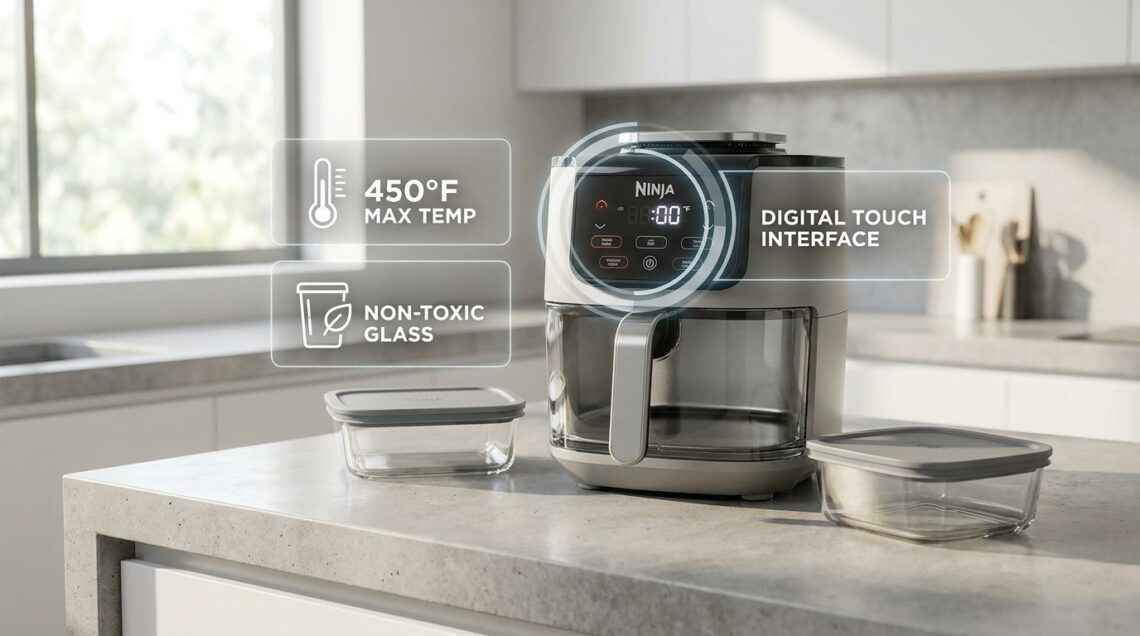
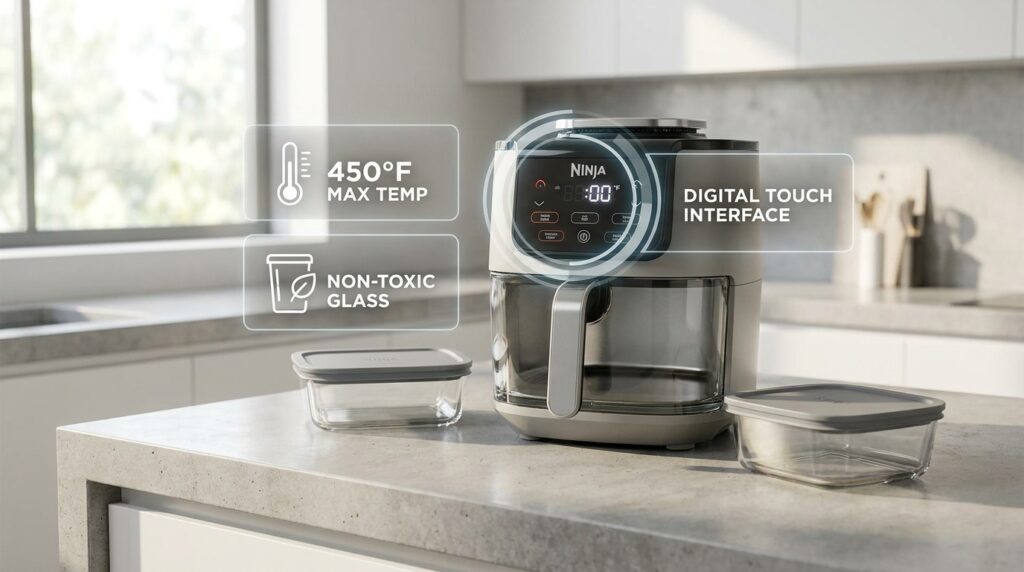
The most distinctive thing about the Crispi is right there in the name — it’s built around glass containers rather than the nonstick-coated metal baskets found in most air fryers. Ninja markets these containers as non-toxic, meaning they’re designed without the coatings that some people prefer to avoid in cookware. Glass also tends to resist scratching and staining in ways that nonstick surfaces sometimes don’t over time.
Two Container Sizes
The unit ships with a 4-quart container and a 6-cup container, both with lids. This dual-size setup is meant to address the reality that not every meal is the same size — a snack for one person doesn’t need the same vessel as a family-sized batch of vegetables.
High Heat Capability
The Crispi is rated to reach up to 450°F, which sits at the higher end for air fryers and is typically enough for achieving browning and crisping on things like wings, fries, or roasted vegetables.
Four-in-One Functionality
While specifics can vary by mode, the “4 in 1” branding generally points to the appliance covering air frying, baking, reheating, and food storage — since the same glass containers that go into the appliance can also go into the fridge with their lids on, then transfer directly back into the unit for reheating.
Dishwasher-Safe Components
Because the containers are glass rather than a coated metal basket, they’re described as dishwasher safe, which may simplify cleanup compared to appliances that recommend hand-washing to protect a nonstick coating.
Stone Color Finish
The unit comes in a “Stone” finish, a neutral, muted tone that’s meant to blend into most kitchen color schemes rather than stand out.
How It Can Be Used
One of the more interesting aspects of a glass-container air fryer is how it can blur the line between cooking appliance and food storage system. Here are some of the ways this type of setup is generally used:
Meal Prep and Storage
Because the containers have lids and are described as suitable for the fridge, it’s possible to prepare a dish, portion it into the container, refrigerate it as-is, and then place the same container back into the air fryer to reheat later. This can cut down on the number of dishes used during a typical meal prep session, since there’s no need to transfer food between a storage container and a separate cooking vessel.
Everyday Air Frying
At its core, the Crispi still functions as a standard air fryer for the usual lineup: crispy vegetables, frozen snacks, chicken pieces, or reheating leftovers like pizza or fries in a way that restores some crispness that a microwave typically can’t.
Baking in Smaller Batches
The 6-cup container size suggests it could be suited to smaller baking tasks — things like muffins, small casseroles, or side dishes — without needing to heat a full-sized oven for a small quantity of food.
Reheating Without Sacrificing Texture
A common frustration with microwaving leftovers is that foods that were originally crispy — fried items, roasted vegetables, pizza — often turn soft or rubbery. Air fryers in general are popular for reheating because they can help restore some of that original texture, and having a dedicated glass container for storage-then-reheat may make that process more seamless.
Serving Directly From the Container
Since the containers include lids and are made of glass rather than a nonstick coated metal, some people may feel comfortable using them as serving vessels directly at the table, which isn’t always advisable with traditional metal air fryer baskets.
Who It May Be Suitable For
This type of appliance tends to appeal to a few different kinds of households, though it’s worth thinking honestly about whether your own habits match up.
People Who Meal Prep Regularly
If you already portion out lunches or dinners for the week, a system that combines storage and reheating into one vessel could streamline that routine and reduce the number of containers cluttering your fridge.
Small Households or Individuals
The 6-cup container in particular seems geared toward smaller portions, which may suit someone cooking for one or two people rather than a large family.
Those Cautious About Nonstick Coatings
Some people specifically look to avoid PTFE or PFOA-based nonstick coatings in their cookware. A glass-based air fryer may be appealing to that group, though it’s worth independently verifying any specific material claims that matter to you.
People Who Value Easier Cleanup
If hand-washing an air fryer basket is a chore you’d rather skip, dishwasher-safe glass containers could be a meaningful convenience factor.
Renters or Those With Limited Kitchen Space
A multi-use appliance that combines frying, baking, reheating, and storage could reduce the need for separate single-purpose gadgets, which may matter in smaller kitchens.
On the other hand, people who cook primarily in large batches for bigger families, or who need a very high-capacity single basket, may find the container sizes here more limiting than a traditional large-basket air fryer.
Important Things to Consider
No appliance is a perfect fit for everyone, and there are a few practical points worth thinking through before making a decision.
Glass Is Heavier and More Fragile Than Metal
While glass has advantages in terms of durability against scratching and staining, it’s inherently heavier than a metal basket and carries some risk of chipping or breaking if dropped, especially on hard flooring. This is a tradeoff worth weighing against the benefits of the material.
Capacity Limitations
A 4-quart and 6-cup container setup is reasonably sized for smaller households but may require multiple batches when cooking for a larger group, compared to appliances with a single, larger basket.
Counter Space and Storage
Even multitaskers still take up counter or cabinet space. It’s worth measuring your available area and considering where the unit — and its containers — will live when not in use.
Learning the Right Container for the Job
With two container sizes serving different functions, there may be a small adjustment period in learning which size works best for which type of food or portion.
Checking Specific Compatibility Details
Details such as exact wattage, timer ranges, or specific preset programs aren’t always fully covered in general overviews, so reviewing the full specifications listed on the product page is a good idea before purchasing, particularly if you have specific cooking needs in mind.
Comparison of General Categories
Air fryers on the market broadly fall into a few categories, and it can help to understand where a glass-container model like this one fits in relative to other common types — without singling out or criticizing any particular brand or product.
Traditional Basket-Style Air Fryers
These typically use a nonstick-coated metal basket and are often praised for their high capacity and straightforward one-basket design. They can be a strong fit for larger households but may involve more careful handling to preserve the nonstick coating over time.
Oven-Style Air Fryers
These larger units often function more like a countertop toaster oven with air-frying capability, offering multiple racks and more capacity, but they also take up significantly more counter space.
Glass or Ceramic-Container Models
This category, which the Crispi belongs to, tends to emphasize material transparency and multi-use functionality — the same container often moves between the fridge, the appliance, and sometimes the table. The tradeoff is generally a somewhat smaller capacity and the added weight and fragility that comes with glass.
Combination Appliances
Some units attempt to combine air frying with other cooking modes like sous vide, dehydrating, or slow cooking. These can reduce the total number of appliances needed but sometimes come with a learning curve for using each function well.
Understanding these broad categories can help clarify what matters most for your own cooking habits — whether that’s raw capacity, material preference, counter space, or multitasking versatility.
Frequently Asked Questions
Is the Ninja Crispi safe to put in the dishwasher? According to the product description, the glass containers and lids are dishwasher safe, which may simplify cleanup compared to hand-washing requirements common with some nonstick baskets.
Can the containers go from the fridge directly into the air fryer? The 4-in-1 design is built around this kind of use — storing food in the container, refrigerating it, and then transferring the same container into the appliance for reheating or cooking.
What’s the maximum temperature it can reach? The Crispi is listed as reaching up to 450°F, which is generally sufficient for typical air frying tasks like crisping vegetables or reheating fried foods.
Are glass air fryer containers heavier than plastic or metal ones? Generally speaking, yes. Glass is a denser material than most plastics and can be heavier than a comparable metal basket, which is a reasonable consideration for anyone concerned about ease of handling.
Does this replace a regular oven? Not entirely. While it can handle many of the same tasks as a small oven for modest portions, its container sizes are more limited than a full-sized oven, so it’s better suited as a complement to existing kitchen equipment rather than a full replacement.
What does “Stone” refer to in the product name? It refers to the color and finish of the unit itself — a neutral, muted tone rather than a bright or bold color.
Conclusion
The Ninja Crispi 4 in 1 Glass Air Fryer takes a somewhat different approach to a familiar appliance category by centering its design around glass containers that are meant to move fluidly between storage, cooking, and potentially even serving. For people who already lean toward meal prepping, who are mindful of nonstick coatings, or who simply want to streamline the number of dishes involved in cooking and reheating, this kind of multi-use design could be a genuinely useful addition to a kitchen. At the same time, its container-based capacity and the inherent characteristics of glass — weight, fragility — are worth weighing against your household’s typical cooking volume and habits.